Astrology and Yoga: A Planetary Practice Guide
Astrology and yoga meet in a simple question: how do you work with your nature instead of fighting it? Vedic astrology maps tendencies, timing, and life themes. Yoga gives the body, breath, and mind a way to respond with steadiness.
Used together, they are not a shortcut to perfect outcomes. They are a reflective practice. Your chart can point to the kind of discipline, rest, mantra, movement, and timing that may support you. Yoga turns that insight into something you can actually do each morning.
This guide shows how to connect planetary themes with yoga practice in a grounded way, without fear-based predictions or exaggerated claims.
Why Astrology and Yoga Belong Together
Vedic astrology, or Jyotish, studies light: the way planetary patterns illuminate karma, temperament, and timing. Yoga studies union: the way attention, breath, movement, and awareness bring the person back into balance.
Astrology can describe the pattern. Yoga helps you participate in it.
For example, a strong Mars may show drive, heat, impatience, or courage. A yoga practice for Mars does not need to suppress that fire. It can channel it through disciplined movement, breath control, and intentional action. A sensitive Moon may show emotional depth and changing moods. Yoga can help that Moon find rhythm through breath, rest, and journaling.
If you want a broader foundation before applying this approach, study the planets in Vedic astrology guide. Once you understand each graha’s basic nature, the practice choices below become easier to personalize.
Start With the Moon
The Moon is the most practical bridge between astrology and yoga because it reflects the mind, habits, sleep rhythm, emotional tone, and daily responsiveness. You do not need to redesign your whole practice every day. Simply noticing the Moon can make your routine more compassionate.
Try this simple rhythm:
- On emotionally heavy days, reduce intensity and emphasize breath.
- On focused days, use steady repetition and longer holds.
- On restless days, begin with grounding poses and slow exhalations.
- On socially sensitive days, include journaling before reacting.
The goal is not to blame the Moon for every feeling. It is to observe patterns. The mental health and Moon placement guide explains this carefully: astrology can support self-awareness, but it should not replace professional care when someone needs it.
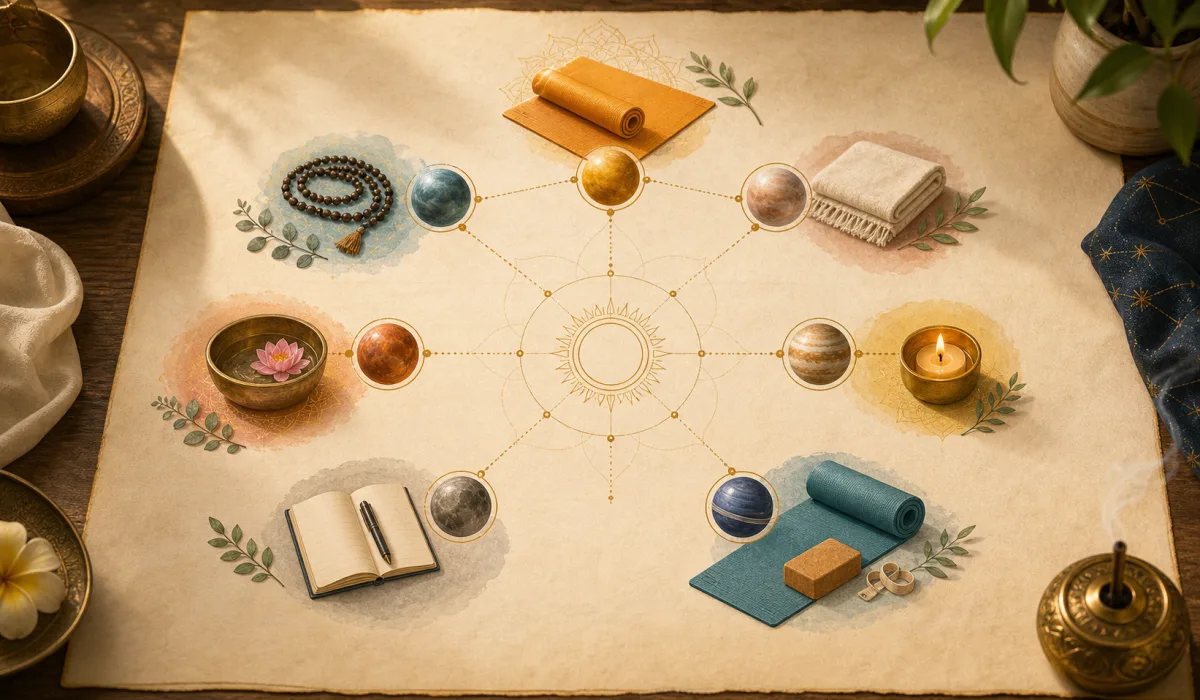
A Planetary Yoga Practice Map
Each planet can inspire a practice theme. Keep this flexible and practical.
| Planet | Practice focus | Useful when you need |
|---|---|---|
| Sun | posture, presence, steady routine | confidence and clarity |
| Moon | breath, rest, emotional regulation | calm and softness |
| Mars | disciplined movement, heat management | courage without reactivity |
| Mercury | coordination, learning, mantra clarity | focus and communication |
| Jupiter | spacious breathing, gratitude, study | wisdom and perspective |
| Venus | gentle flow, beauty, devotion | ease and relationship harmony |
| Saturn | slow holds, consistency, humility | patience and endurance |
| Rahu | grounding, digital boundaries, honesty | clarity during craving or confusion |
| Ketu | silence, meditation, simplicity | detachment and inner listening |
Do not treat this as a strict prescription. Use it like a menu. If your chart or current Dasha emphasizes Saturn, a slow and consistent routine may help more than a dramatic new challenge. If Mercury is active, mantra, study, and breath-counting may feel especially useful.
Matching Practice to Your Chart
A birth chart can suggest what kind of practice is easiest to maintain. Look at three layers first:
- Lagna and Lagna lord: shows body orientation, stamina, and how you approach effort.
- Moon sign and Nakshatra: shows emotional rhythm and what helps the mind settle.
- Current Dasha: shows which planetary themes are currently louder.
If Mars or the 6th house is strong, you may respond well to disciplined movement, strength work, and clear goals. If Venus or the 4th house is emphasized, a beautiful and peaceful practice space may help consistency. If Saturn is prominent, short daily practice done for months will likely serve you better than intense bursts followed by burnout.
Keep the interpretation humble. A chart does not know your injury history, current fitness, medical needs, or teacher support. Adapt the practice to your real body and get qualified guidance for physical limitations.
Using Mantra With Yoga
Mantra is one of the cleanest ways to bring astrology and yoga together. It gives the mind a sound pattern, while the body settles through breath and posture.
A simple structure:
- Sit comfortably for two minutes.
- Take slow, even breaths.
- Chant a planetary mantra 9, 27, or 108 times.
- Practice gentle movement or stillness.
- Close by naming one practical action for the day.
For example, a Saturn practice may include slow breathing, a Shani mantra, and one disciplined task you have been avoiding. A Jupiter practice may include gratitude, study, and a generous action. For mantra details, use the planetary mantras complete guide rather than guessing pronunciation or meaning.
Timing Your Practice
Astrological timing can make practice feel more intentional. The simplest method is weekday alignment:
- Sunday for Sun: confidence, vitality, purpose
- Monday for Moon: emotional care, rest, nourishment
- Tuesday for Mars: courage, discipline, physical effort
- Wednesday for Mercury: study, writing, mantra clarity
- Thursday for Jupiter: wisdom, teaching, gratitude
- Friday for Venus: harmony, beauty, devotion
- Saturday for Saturn: patience, service, long-term discipline
This does not mean you should practice only on certain days. It means each day can carry a theme. If you already follow planetary fasting or charity, combine the routine with the weekly remedy schedule so your spiritual practice, seva, and discipline support each other.
A Seven-Day Astrology and Yoga Routine
Use this starter plan for one week:
| Day | Practice |
|---|---|
| Sunday | Stand tall, breathe into the chest, set one clear intention. |
| Monday | Practice gentle forward folds, slow exhalations, and Moon journaling. |
| Tuesday | Do mindful strength work, then pause before action or speech. |
| Wednesday | Count breaths, chant clearly, and write one page by hand. |
| Thursday | Read a spiritual text, practice gratitude, and teach or help someone. |
| Friday | Choose a softer flow, clean your space, and repair one relationship tone. |
| Saturday | Hold simple postures slowly, simplify commitments, and finish one duty. |
Repeat the week twice before judging it. Astrology becomes useful when you observe patterns over time.
Mistakes To Avoid
Making the practice too complicated
If the routine needs three apps, five charts, and an hour of calculation, it will not last. Start with one planet, one weekday, or one Moon observation.
Using astrology to avoid responsibility
Rahu, Saturn, or Mars may describe pressure, but they do not excuse harmful choices. A good practice makes you more honest, not more fatalistic.
Forcing intense yoga during difficult periods
Some transits and Dashas call for steadiness, not intensity. If your body is tired or stressed, choose breath, walking, restorative poses, or a teacher-guided modification.
Expecting guaranteed results
Yoga and astrology can support clarity, discipline, and reflection. They do not guarantee career success, marriage timing, health outcomes, or spiritual breakthroughs.
Final Takeaway
Astrology and yoga work best together when they become a daily rhythm: observe the chart, listen to the body, steady the breath, and choose one aligned action. The planets give themes. Yoga gives practice. Your life is where the two become real.
Start small. Pick one planetary focus for the week, keep the practice accessible, and journal what changes. Over time, the chart becomes less like a prediction machine and more like a mirror for conscious living.
Continue your astrology study
Related guides and tools
Use this Sade Sati 2026 guide to understand Saturn in Pisces, which Moon signs feel the cycle most, and how to respond with discipline instead of fear.
spiritual growth Saturn Testing You? 5 Shani Signs and RemediesWondering if Saturn is testing you? Use five Shani signs, timing checks, grounded remedies, and free Kundli/AI paths to respond without fear.
remedies Career Remedies: Vedic Astro SolutionsDiscover powerful Vedic remedies for career success. Learn career astrology tips, growth remedies, planetary solutions, gemstones, mantras, and fasting rituals.
career finance 10th House: Vedic Career InterpretationVedic astrology 10th house guide: reveals career direction, profession indicators, promotions, and reputation using planetary placements.
education 9 Planets in Vedic Astrology: Navagraha MeaningsLearn the 9 planets in Vedic astrology, what each Graha controls, how to read planetary strength in a Kundli, and when remedies are suitable.