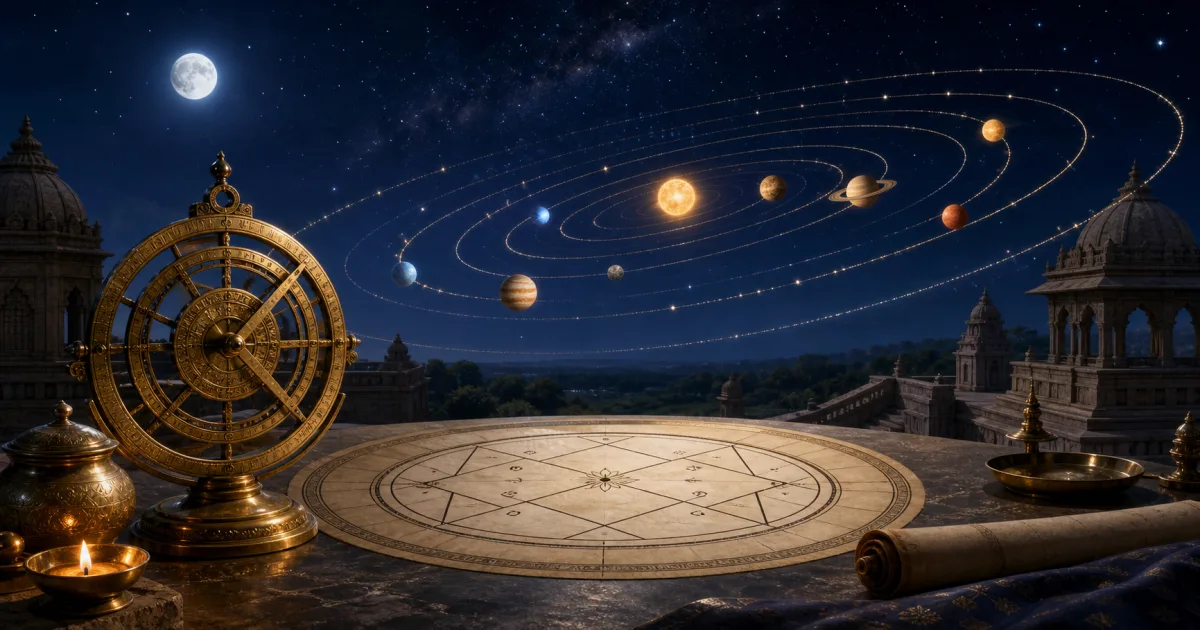
Current Vedic Transit: Read Planetary Transit Today
Checking the current Vedic transit can feel overwhelming at first. The Moon has changed signs, Mercury may be retrograde, Saturn is shaping a long-term lesson, and one app says the day is lucky while another says to wait.
The better approach is not to chase dramatic predictions. A useful planetary transit today reading starts with a simple question: which moving planets are activating your birth chart right now, and what practical response would keep you steady?
This guide gives you a repeatable Vedic transit method for daily planning. Use it for reflection, timing, and self-awareness, not as a guarantee of fixed outcomes.
What Current Vedic Transit Means
In Vedic astrology, a transit is called Gochar. It describes the present movement of planets through the zodiac and how those moving planets interact with your natal Moon sign, ascendant, houses, and running dasha.
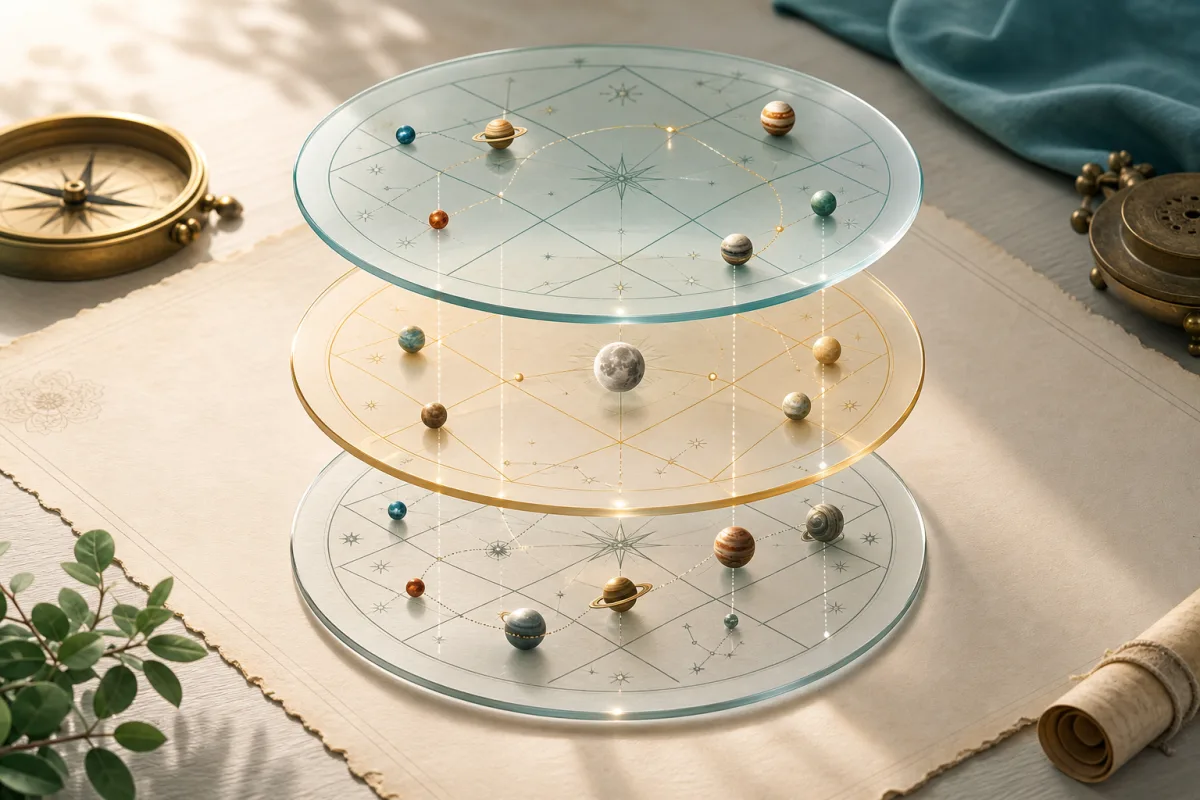
A daily transit reading usually includes three levels:
- The Moon’s sign and nakshatra for the immediate emotional tone
- Fast-moving planets such as Mercury, Venus, Mars, and the Sun for short-term activity
- Slow-moving planets such as Jupiter, Saturn, Rahu, and Ketu for larger life themes
For the bigger yearly picture, compare your daily notes with the planetary transits 2026 calendar. For the theory behind aspects, houses, and long-term movement, use the complete planetary transits guide.
Start With Moon Sign and Ascendant
Most people open a transit chart and immediately look at every planet. That creates noise. Start with two anchors: your Moon sign and your ascendant.
The Moon sign shows how the day may feel internally. It reflects mood, mental pace, comfort, instinct, and emotional reaction. If the transiting Moon falls in your 6th, 8th, or 12th house from the Moon sign, you may want a quieter schedule, more patience, and fewer unnecessary confrontations.
The ascendant shows the practical life area being activated. A transit through the 10th house from the ascendant may highlight work, authority, visibility, or responsibility. A transit through the 4th house may bring attention to home, rest, property, or family matters.
Read both together. If the Moon sign shows emotional sensitivity but the ascendant shows career activation, the advice is not “avoid work.” It is “work with steadiness, keep meetings structured, and avoid reactive decisions.”
A Five-Step Daily Gochar Method
Use this short routine when you want to understand Vedic transit today without getting lost.
- Check the Moon first. Note the Moon sign, nakshatra, and the house it occupies from your Moon sign and ascendant.
- Notice major changes. Has a planet entered a new sign, turned retrograde, become direct, or formed a close conjunction?
- Separate short-term from long-term. The Moon may describe today’s mood, while Saturn and Jupiter describe months of work, maturity, or growth.
- Filter through dasha. A transit becomes more noticeable when it touches the planet, sign, or house connected to your current mahadasha or antardasha.
- Convert insight into action. Choose one practical adjustment: slow down paperwork, schedule a conversation, rest, study, donate, meditate, or prepare before moving.
If you want a more complete daily framework, the daily Vedic horoscope accuracy guide explains how Moon sign, Panchang, and dasha combine in serious forecasting.
Add Panchang Before Big Decisions
Transits show which houses and planets are active. Panchang shows the quality of the day itself. Before important meetings, rituals, purchases, travel, launches, or family decisions, check the five Panchang limbs:
| Panchang limb | What it adds to transit reading |
|---|---|
| Tithi | The lunar day and whether the tone supports growth, closure, devotion, or restraint |
| Nakshatra | The emotional and symbolic quality of the Moon’s position |
| Yoga | A subtle Sun-Moon combination that can support ease or require caution |
| Karana | Micro-timing for practical tasks |
| Vara | The weekday planet and its natural theme |
This does not mean ordinary life must wait for perfect timing. Panchang is most useful when the decision matters enough that a calmer window would help. The Panchang calculator guide is a useful companion when you want location-aware daily timing instead of a generic good-or-bad label.
How to Read Difficult Transits Without Fear
A difficult transit is not a sentence. It is a signal to act with more awareness.
Saturn may ask for discipline, patience, boundaries, and repair. Mars may bring urgency, courage, irritation, or technical focus. Rahu may amplify desire, digital activity, foreign links, or confusion. Ketu may create detachment, spiritual focus, or a need to simplify.
The question is not “Will something bad happen?” A grounded question sounds like this:
- What needs more structure today?
- Where am I likely to overreact?
- Which conversation needs timing and restraint?
- What can I complete instead of forcing a new beginning?
- Which remedy or habit keeps my mind steady?
This keeps astrology practical. It respects the pattern without making fear the center of the reading.
Use Dasha as the Personal Filter
Two people with the same Moon sign can experience the same transit differently because their dashas differ. If you are running Jupiter dasha, Jupiter’s transit may feel louder. If you are running Saturn dasha, Saturn’s lessons may become the main storyline even when faster planets look supportive.
That is why daily Gochar is strongest when combined with personal timing. You can use the dasha calculator guide to understand the planetary period running beneath your current transits.
A simple rule helps: transits describe the weather, but dasha describes which room of your life has the window open.
Practical Examples
If the Moon is transiting your 3rd house, the day may support communication, writing, short travel, outreach, and courage. If Mercury is also strong, use the window for emails, applications, learning, or negotiation.
If the Moon is transiting your 8th house, choose privacy, research, budgeting, therapy, or spiritual reflection over impulsive exposure. This does not mean the day is bad. It means depth is favored over display.
If Saturn is activating your 10th house, career progress may require more structure, accountability, and patience. Instead of expecting fast reward, build systems, document work, and take responsibility for long-term reputation.
If Jupiter is supporting your 9th or 11th house, learning, mentors, networks, and wider opportunities may become more available. Still, Jupiter works best when paired with wise action, not passive hope.
A Transit Journal Template
Use this quick note once a day for two weeks:
| Prompt | Your note |
|---|---|
| Moon sign and house | Where is the Moon from my Moon sign and ascendant? |
| Main transit | Which planet feels most active today? |
| Dasha filter | Does this connect to my current dasha? |
| Panchang cue | What tithi or nakshatra sets the tone? |
| Practical action | What should I do, delay, simplify, or prepare? |
| Evening review | What actually happened, and what did I learn? |
After a few weeks, you will start seeing patterns. Some nakshatras may help your focus. Some Moon houses may ask for rest. Some transit combinations may improve communication, while others call for silence and preparation.
Final Takeaway
Reading the current Vedic transit is most useful when it becomes a calm planning ritual. Start with the Moon sign and ascendant, notice major planetary movement, filter through dasha, add Panchang for important timing, and turn the reading into one grounded action.
Use VedicGod to create your chart, confirm your Moon sign and ascendant, and compare daily Gochar with your current dasha before making important life decisions. Astrology can guide reflection and timing, but your judgment, context, and effort still matter.
Continue your astrology study
Related guides and tools
Learn Vedic horoscope daily method blending Panchang and transits. Build a step-by-step routine for reliable daily guidance.
horoscopes Vedic Daily Horoscope: Moon Sign vs Ascendant GuideWhen to follow your Moon sign vs Ascendant for Vedic daily horoscopes. Get a practical framework and planning examples for better accuracy.
horoscopes Daily Vedic Horoscope: How Accurate Are They? (Guide)Daily Vedic horoscope - how accurate are they? Complete guide to Panchang elements, Moon sign tracking, and accuracy benchmarks. Test your horoscope accuracy!
horoscopes Monthly Vedic Horoscope: Plan Your Month by Moon SignUse a monthly Vedic horoscope as a practical planning guide: read your Moon sign, track transits, use Panchang timing, and review each week with clarity.
horoscopes Weekly Horoscope 2025: Free Signs PredictionsWeekly horoscope 2025 - free predictions for all 12 signs! Plan your week with cosmic guidance for love, career, money, and health.